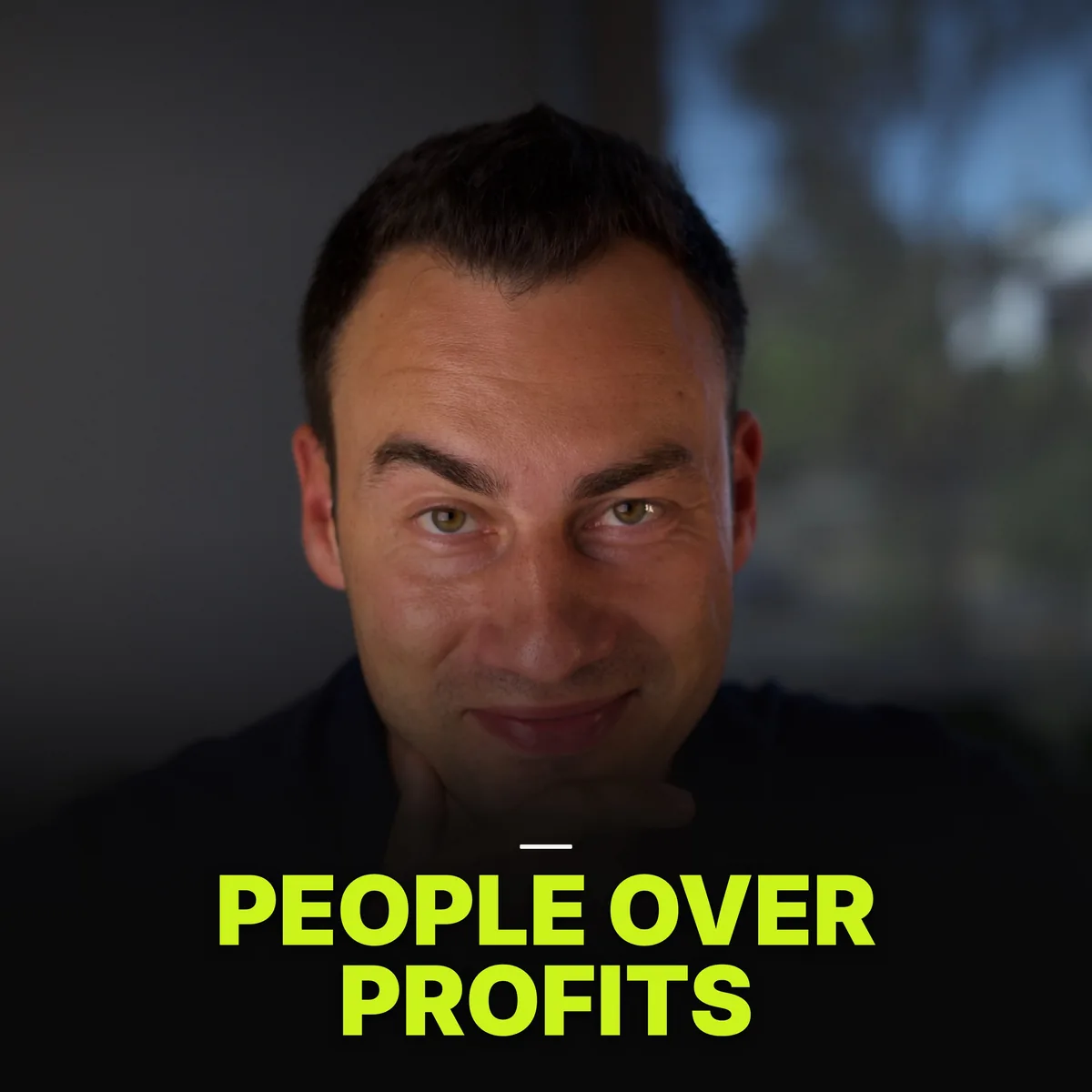
Six Private Equity Offers a Week, and He Sold to His Staff Instead
with Eric Rieger
Eric Rieger spent six years researching how to sell WEBIT Services to the people who worked in it, then about twenty minutes signing the paperwork. Private equity had been calling for years: handwritten letters to his home address, his mobile ringing, six or seven offers in a week once revenue crossed $5 million. He turned all of it down, because the people who built the company had become his friends and he could not picture handing them a new owner on his way out.
We also get into the numbers almost nobody in the channel puts on the record. About $70,000 to set the employee stock ownership plan (ESOP) up, five or six thousand a year to administer, plus a $10,000 to $15,000 annual valuation. The four prerequisites before anyone should attempt it. A seller note instead of a bank, so he stayed in control of the payments. And how an employee actually turns those shares into money, with a payout schedule designed so a wave of retirements cannot drain the business.
What we cover
- Handwritten letters at home and six offers a week once revenue crossed $5 million
- What an ESOP actually is: a trust, shares issued every year, a valuation every year
- What it costs to set up, and what it costs to run
- The four prerequisites: $5 million in revenue, twenty employees, taxes paid, no debt
- Why he started at 30%, and the seller note that made him the bank
- Selling the other 70% by merging into an employee-owned holding company
- How an employee gets liquidity, and the payout design that protects the cash
- Private equity lobbying Congress to make employee ownership harder
Chapters
- 00:00Cold open and intro
- 01:09Titanic Enterprises, and a T-shirt business losing money on every order
- 02:29Talking his way into a developer job with no code
- 03:01Quitting, then hired back as the first MSP contract
- 03:41Thirty years of fits and starts, and a materials management degree
- 04:45Robin Robbins, Gary Pica and TruMethods
- 05:06Hiring leaders and letting operations go early
- 05:59The four pillars of a business
- 06:25Small Giants, open book management, and the 2016 left turn
- 07:52Referrals and nonprofits after outside marketing failed
- 09:10The warm 250, and leading with information over sales
- 09:52When the exit question first came up
- 11:182016, the year that changed everything
- 12:04Handwritten letters at home and six offers a week
- 12:53Getting the word out that the company was not for sale
- 13:25What an ESOP is: a trust, the Employee Retirement Income Security Act (ERISA), and shares every year
- 13:56The drawbacks, starting with the cost
- 14:24Twenty minutes to sign after six years of homework
- 15:17The federal tax position at 100% ESOP
- 16:00The four prerequisites before you attempt this
- 16:54The seller note that made him the bank
- 17:11Employee ownership trusts (EOTs), perpetual purpose trusts (PPTs) and worker co-ops
- 18:14Is $5 million really the threshold, and what it costs to set up
- 19:20How the debt works: the business buys itself
- 20:10An independent valuation that came back higher than expected
- 21:44Selling the other 70% through a merger
- 23:21Vesting cut to three years, plus 4% 401(k) matching
- 24:12How an employee actually gets liquidity
- 25:54Designing the payout so a mass retirement cannot drain cash
- 28:31Life after the merger
- 29:50Shared services and budgets
- 31:41The fractional chief financial officer (CFO) who talked them into it
- 33:15People over profits, and not being an anti-capitalist
- 33:53The book, and the income inequality gap behind it
- 35:22Private equity lobbying Congress to make ESOPs harder
- 35:52The grid: ESOP, EOT, PPT, co-op, evergreen
- 37:21The friend who sold and lost every relationship in the building
- 38:23Where to find Eric
The guest
Related reading
Built something the industry should hear about?
A niche you own. A pricing change that worked. A near-death moment you survived. Just the story of how you actually built it.
Apply to be a guest →