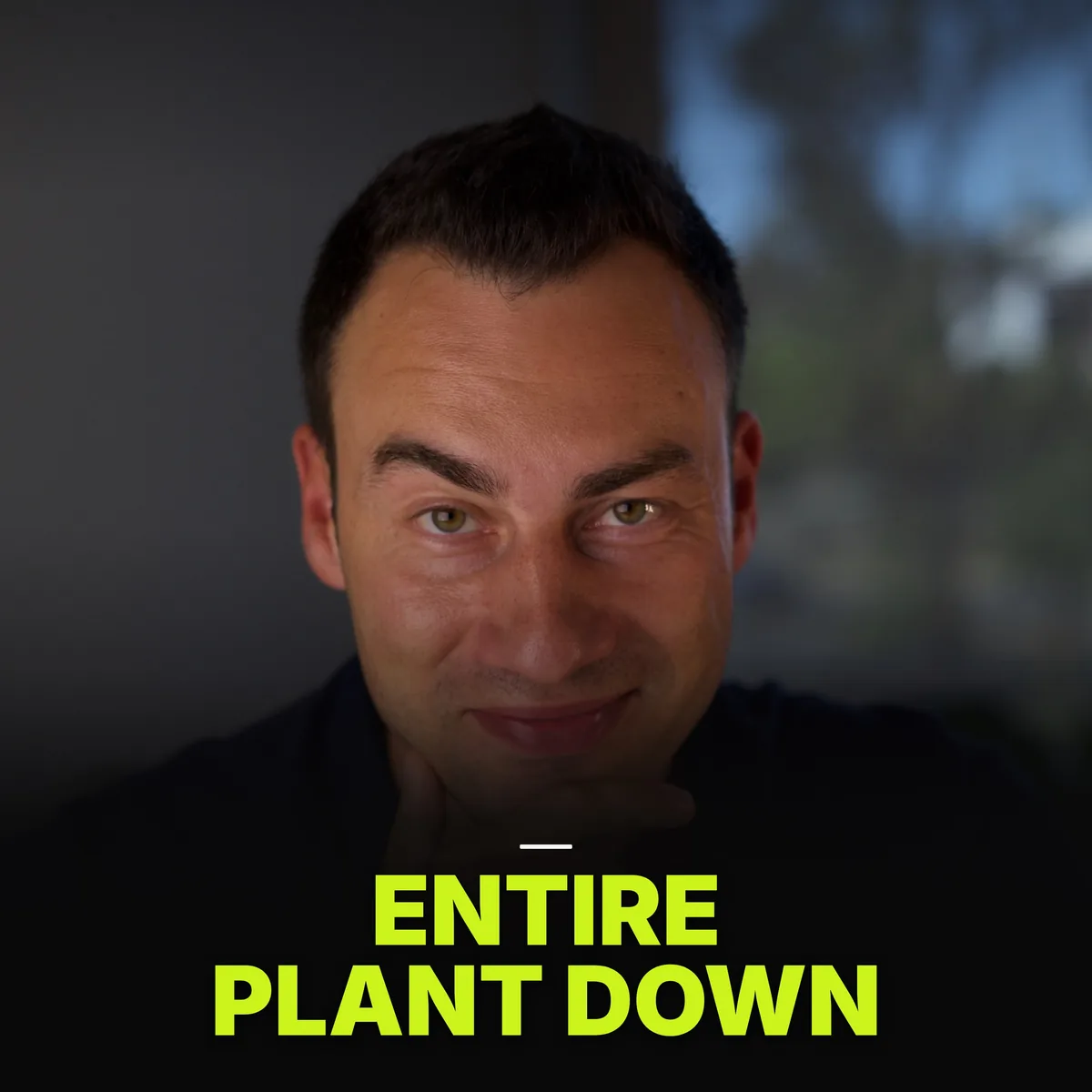
He Ran Security for The Weather Channel. Now He Keeps Factories and Fleets Online.
with John Penrod
If a just-in-time supplier is late with a windshield, the entire car plant shuts down, and John Penrod says that supplier can be fined $50,000 every 15 minutes. Customers like that have to stay up. At Transcend Networks, his managed service provider (MSP), that means redundancy and monitoring built so something can fail while operations keep running, plus recovery plans that start from what the business needs. Then the same lessons go to their smaller clients.
John founded Transcend Networks, an Atlanta MSP, in 2003. He ran it solo for a number of years and brought on a partner in 2014, and today they own it 50-50: John's background is technology and information security, his partner's is operations and sales. John has also served as chief information security officer (CISO) at the Weather Channel. Automotive manufacturing is one of the firm's best core businesses. Word of mouth brought in broadcast video and state government work, and the best fit right now is companies with 25 to 75 users.
What we cover
- How a late windshield can shut down an entire car plant, and the fine he says the supplier faces
- Redundancy and monitoring, so something can fail while operations keep running
- Why a disaster recovery plan starts with business needs, and what an outage would mean for a client with one server
- A Kaseya and Datto shop that adds open-source tools such as Zabbix where they are needed
- Cold calling, a full-time vice president of sales, and speaking at the Georgia Automotive Manufacturers Association
- Using artificial intelligence (AI) for engineering answers that once took days with a vendor, while keeping confidential data out of it
- Buyers who call about acquiring the firm, and why he treats every one of those calls as training
- Phishing emails that include an entire conversation thread, so the request looks already approved
- The good hurricane: a speaking engagement from his Weather Channel days, and why more business from fraud is still a shame
- Scam Microsoft Teams calls, money wired abroad that you will never see again, and the time Hong Kong police laughed at him
- Cyber insurance checklists that can be almost impossible to satisfy, and why you still have to have it
- Open source where necessary, rather than where possible
- Getting a busy client's time for the risks, from admin rights to bad batteries
- Co-managed information technology (IT): a client's own IT person takes tier one and Transcend covers tier three and higher
- Letting clients hear they are down from their provider before the front desk tells them
- Staff on site full-time at state agencies in Georgia and North Carolina, working at the client's pleasure
- After a larger equity-backed MSP bought the firm he worked at, the sales meeting where losing five customers and gaining 10 counted as a net win
- Lightning round: deep web monitoring as a scare tactic, and training with simulated phishing as the most underrated thing
- Cloud or on-premises in five years: VMware licensing, Azure costs and a dishwasher that has to be online for rinse mode
- The MSPs that survive the next five years, and starting out on open-source tools
Chapters
- 00:00The cost of factory downtime
- 00:28Introducing John Penrod
- 00:58Founding Transcend and splitting responsibilities
- 01:56Keeping factories running: uptime and recovery
- 05:05The MSP technology stack
- 06:11Sales, referrals and manufacturing events
- 07:42AI for engineering and client guidance
- 09:53Growth plans and private equity conversations
- 11:04Phishing, fraud and evolving threats
- 13:39Cyber insurance and the security checklist
- 15:17Open-source tools and security trade-offs
- 16:50Getting clients to act on IT risks
- 18:01What co-managed IT looks like
- 22:37On-site IT teams and escalation support
- 25:04Finding markets and building customer relationships
- 27:47Lightning round: tools and deep-web monitoring
- 29:09Security training and simulated phishing
- 31:03Cloud or on-premises in five years?
- 32:27VMware costs and the push toward cloud
- 34:26MSP survival and starting with open-source tools
The guest
Transcript
Lightly corrected captions from the published episode. Timestamps match the audio.
Show full transcriptHide transcript
So when you buy your Mercedes and it hits the plant, the only thing that's there is the frame and that as they need parts, they get parts from JIT suppliers. So if a JIT supplier doesn't provide the windshield in time, it shuts the entire plant down and they can be fined $50,000 every 15 minutes. So realistically, those are the customers that you have to keep up and have to make sure they stay up and stay out of no issues.
And then you take what you learn from there and you also apply it to your other SMB customers and make sure they get the rewards that you've got inherently. Welcome to Play It Smart, where the smartest founders in managed IT, security and AI show how they actually build. I'm Alexej Pikovsky. My guest today is John Penrod. He hunted submarines for the Navy, then became the Weather Channel's first chief information security officer and in 2003 co-founded Transcend Networks, an Atlanta firm that keeps factories, fleets and broadcasters running. John, welcome to the show. Thank you for having me. I appreciate it.
So one question I wanted to ask, you obviously co-founded MSP and you've been running it two principle, let's say over 23 years now. How do you split your roles with the other co-founder? So a little clarification. We were founded in 2003 and I kept the business solo for a number of years and then in 2014 I brought on a partner. You know, my background is technology. My background is information security and that stuff of that nature. His background is operation and sales. So we blend very well together.
We're 50-50 owners and we always do a pretty good job of making decisions together. Okay, fair enough, fair enough. All right, so he runs all the proposal calls and some of the discovery calls as well, basically. Yeah, he gets involved in that. Not to say that I don't, but he mainly gets involved in that and works directly with our VPS sales. And in terms of your, let's say, industry focus, right, you obviously target a few different industries, but what does a manufacturer or logistics operator get from a former national broadcaster, security chief that a typical IT provider can never give them?
One of the jobs that I did is CISO, the Weather Channel, it's BCP/DR. Doing business recovery, business continuity. One of the things that, you know, we take very seriously as uptime and not to say that another industry wouldn't care, but when you deal with something called, so let's take, for example, the Mercedes plant in Alabama, down in Alabama. They may have, you know, 30 or 40,000 employees, but then there's this thing called a JIT supplier, just-in-time supplier that provides parts. So when you buy your Mercedes and it hits the plant, the only thing that's there is the frame and that as they need parts, they get parts from JIT suppliers. So if a JIT supplier doesn't provide the windshield in time, it shuts the entire plant down and they can be fined $50,000 every 15 minutes.
So realistically, those are the customers that you have to keep up and have to make sure they stay up and stay out of no issues. And then you take what you learn from there and you also apply it to your other SMB customers and make sure they get the rewards that you've got inherently. So I guess like in practical terms though, right, how do you do that? I mean, you use some sort of software and certain engineers watching it closely or how do you do it in practice?
Sure. So I'll give you an example. There's a particular function that happens every Sunday night where the files get uplinked and then there's no inherent monitoring in that uplink design. So we design that, build it, and make it so that it gets monitored. So one of the things that's most important is redundancy and monitoring. And is there two internet connections? Is there two firewalls? Is there double switches? Is there redundancy in the virtualization? Making sure that you can have something fail, but then the operations doesn't fail. Mm-hmm, mm-hmm. I see, I see. And when you speak to clients who are looking to move MSPs, for example, are you seeing that most MSPs don't provide that or is that very frequent?
Well, you know, a common question I get is, from our existing customers, is will you write us up on a DR plan? Our insurance company is asking for a DR plan and I stop them and I tell them, well, a DR plan doesn't start with IT, it starts with your business needs. And then from there, you build an IT component to DR. New customers, we just picked up a recent customer that does sales for HVAC and they have one server, one environment. And then we talk about what that looks like. Is it being backed up? Is it being backed up how frequently? Is that frequently enough? Is there special databases that have to be backed up independently of that?
And then we kind of give them what the expectation is of an outage. If this happens, this is going to happen to you. If this happens, this is going to happen. And putting them in a position where they understand if they're one server that they're spending money on does die and they didn't elect for backups, then what's the cause and effect, in other words? Yeah. In terms of, I guess, your tech stack, yeah, what's your tech stack? I guess like a lot of that is off the shelf, right? Like similar to other MSPs and then what is something you almost built yourself? Is there anything like that in your tech stack at all? Yeah, so we look at, we talk about taking care of the customer and then taking care from an infosec standpoint. There's a layered approach to it. There's, how are you handling their inbound email? How are you handling their firewalls? How are you handling their remote management, that type of stuff?
So there's a combination of tools. We're a Kaseya Datto shop. It's been a decision we've made the last couple of years. We've been happy with it. We use some open source tools, such as Zabbix for enterprise monitoring. We use some other tools. We take advantage of open source tools, where they're needed. Some of our customers are a little bit worn off, so some solutions that were for them would be a little extra. Yeah, it makes sense. And then you mentioned your, let's say business partner, that's taking care of ops and sales.
What's your marketing and sales stack looking like? You get, obviously, quite a few referrals, I guess. Do you have any other sources of leads? Sure. We have a company that's doing cold-calling for us, and then we have a VP of sales, who is his job. It's just a full-time 100 % job, is to bring on sales, to bring on new customers, and bring new opportunities. We've deep dove into Google search engine, haven't had a lot of luck with that, although we did just get a call the other day from someone who found us via Google.
That's always encouraging. You know, that's a slow to adopt. It takes a while for that to become productive. Mostly it's cold-calling and referrals, and word of mouth. I guess his role, right, the, let's say, chief, let's call him, head of revenue, head of sales, who works, I guess, like who reports into your business partner, apart from dealing with the agency who does cold-calling, what else does he do? I mean, do you do any events at all in Atlanta, or?
Yeah, we do. We've been a guest speaker at GAMA, Georgia Automotive Manufacturers Association. There's some other events that we've been to, SAC, and stuff of that nature. We focused them around the automotive industry and the automotive manufacturing industry. That is one of our best core businesses. With AI, right, how do you see the industry change? You know, we use it extensively for engineer, engineer, how would you word it, enhanced engineering. You know, the questions that you would have in the past had to have contacted the vendor and, you know, worked out a solution that might have taken you a couple of days. You can find, you can get some results instantaneously from AI.
That you have to take with a grain of salt, of course. You know, you have to make sure the data you put into AI is not confidential. You have to make sure that the information that you pull out of AI has some legitimacy to it. But, you know, for things like that, I think it's been extremely beneficial for us. Yeah, that's great building, you know, internal processes and things like that. But I guess, like, what do you do if your clients or leads ask you for AI governance or AI solution, right? Like, what is it that you can offer to them?
So, we've had that a few times and our guidance there is always, you know, it's new technology. It's not something you should necessarily trust so don't be feeding your entire accounting book system to them. We've worked with a couple of customers that have ended up going on to use it for their needs. So, we've got a customer who does Windows file development and they're using it to help write the code for that. So, it's just a matter of keeping it secure and keeping it safe.
But you don't run an AI readiness or AI governance solution yet, right, basically? No, we haven't had the draw or the need for it. Okay, interesting. Okay, do you think that will change in the future? Yeah, I think it's going to be more of an adoption. I think, you know, there's a lot of speculation out there that AI is a bit of a dot-com boom type of thing and that you're going to see a lot of it fade off and you hear, you know, OpenAI that's out of business because they're out of money. But I think the genie's out of the bottle and I think it's something that's going to be here to stay.
Yeah, and then in terms of, you know, your strategy, long-term, I guess, you're just happy continuing to, let's say, compound and grow or do you want to scale more aggressively and then sell to one of the PE roll-ups so AI roll-up plays what's your long-term strategy? Well, we want to scale aggressively for sure, bringing on the salesperson, bringing on investing, making the investment in marketing and stuff, that nature has really been beneficial to us. When we decide to hang it up, I'm not sure. We're still having fun.
And I guess, like, have you ever been approached by PE in the past? Yeah, within the last couple of weeks, we have several folks that we... We have people approach us and they have interest in purchasing us and I view every one of those calls as training for myself. I love having those calls. I like understanding where they're looking for, what they're looking at, what they're looking at from an EBITDA standpoint and that type of nature.
Those have just been discussions. Nothing's come out of them, mostly because we pushed back a little bit. And in terms of, I guess, challenges you have right now, right? Like what is, for example, two challenges you currently have, what would they be? Well, one for sure is just an ever-changing threat environment. We're starting to see a lot more phishing attempts that have been well-written. They include an entire conversation thread, making it look like the person who's in charge has already approved the process and getting users to understand through training and through experience that it's not real. It's fake and that if someone asks you for your wiring number, don't give it to them, that type of stuff. That's definitely a growing issue for us.
But is that not almost a good thing for you? I mean, that means there will be more business for you. You know, it's funny, one of the things that I did a speaking engagement when I was at the Weather Channel and one of the things that I mentioned that everyone gasped, I referred to it as a good hurricane. And I said that, and they're like, there's no such thing as a good hurricane. I said, well, from my point of view, there is, because the ad dollars that we can spend based on the number of eyeballs watching the TV grows extensively when there's a good hurricane. So this is a good, it's a good hurricane. Sure, it's great that I got more business. It's just a shame that I got to get the business that way. It would be nice if we were all in a happy world and everything was fine, but that stuff does exist. You have real people, like for example, one of the things that's going on right now is Teams calls.
Getting unsolicited Teams calls saying your IT and that your computer needs help and then how do you get someone to make sure they don't fall for it? Because it's really good. You know, if you go back 30 years, 40 years, the average hacker was a kid in his mom's basement making a name for himself. But now if there's a chance that I can get you to wire me $300,000 and I'm gone. I'm not even in the country. I'm probably in Nigeria. I'm somewhere along that nature and that money's gone. You're never going to see it again.
So, you know, I always tell people you can go in and grab a gun and go rob a bank and you're going to jail for the rest of your life. But if you do white collar crime like this, it's almost impossible to get caught if you're not in the United States. So educating people, I've been on the phone with Hong Kong police before and had them laugh at me. You know, and that is just the thing you've got to get people to understand that once it's gone, it's gone. There's no crying about it, not going to get it back.
Would cyber insurance not cover it if you would have one? Oh gosh, cyber insurance is great. They're just like any other insurance company though. They're going to look for a reason not to pay a claim. So like for an example, you know, you go through the questionnaire. You know, you have a customer says, I want to get cyber insurance. So you say, okay, great. And then go, well, you go through the checklist with us. I'm like, sure, no problem. So the first thing is the people that are not specifically have IT in their title, do they have administrative access to their machines? And I'm like, you guys have all got admin access. Are you really ready to get rid of it? And then there's changes that have to be made to make sure that you fit within that guidelines. And a lot of times cyber insurance will also give you things that are almost impossible to satisfy. Like for an example, enforcing two-factor authentication on everything.
Well, some products still don't support two-factor authentication. So do you have a choice now? Do you run them anyway and take the risk? Or do you stop running them and go and spend money on something that does support it? So cyber insurance policy, they're great, but they can be not great. Interesting. So would you, if you were to have a choice, would you suggest a client should have one? Or you don't really care? Okay. So despite all of the issues, right, like them trying to find an excuse not to pay out, you still suggest that I recommend. Yeah, you still have to have it. It's crossing your T’s and dotting your I’s. You still have to have it.
Got it. Talking about vulnerabilities, et cetera, and you mentioned a lot of your tech stack, or you tried to use open source where possible, there is an argument that these days, open source solutions are more secure than the other solutions out there which are not open source, right? Partly because when it's open source, more people look at the code, try to close any vulnerability, et cetera. Would you agree with that? Would you kind of say that a lot of the solutions in the cybersecurity world might actually be vulnerable themselves and therefore the clients who use them or even the MSPs might be vulnerable as a result of that?
It's a true statement that in a lot of cases, open source software is more secure. But it's also a correct statement saying there's more options for open source which leads to more potential for vulnerabilities. So if I'm going, I don't believe that, you use the words like where possible, I would really say that it's more where necessary. You know, I'm not going to use open source. I've never spent any time looking for an RMM solution that's open source because I like the one I have.
You know, if you look at the threat history, you look at the issues that Kaseya had with their RMM software, you look at some of the stuff that N-able had in, you know, it's a lot of focus, a lot of attention on that, but you know, it's necessary software to do business. It's just, you know, it's necessary. Interesting, yeah. So we discussed one challenge, right, in terms of like increased, you know, fraud and cyber attack activity.
What's the second challenge, for example, running an MSP these days? I would suggest that getting a customer's time, they're busy running their business. You know, we, you know, making sure that on a semi-annual basis, you try to get in front of the customer, earn a quarterly or semi-annual basis and go through the issues, make sure they're aware of the issues, make sure they understand that, you know, you gave Bob admin rights and now you're in violation of your infosec policies, your infosec policies, and you're in violation of your insurance product, letting them know that they have, you know, even little things like bad batteries and UPSs that need to be replaced but haven't been replaced because they haven't spent the time to approve the quote or approve the process.
You know, that's probably, to me, the communication with the customer, making sure they understand what's going on, making sure what they need to do, making sure that they are not letting things slide on their side in a polite way, of course. Makes sense, makes sense. Do you do co-managed IT as well? Yeah, we sure do. Historically, we've been holistically taking care of IT for most customers. Here recently, we've picked up a couple of customers that are co-managed. They're specifically co-managed. They pay us per month, break glass in case of fire type of thing. They want to touch the issues first but they expect us to be there if the problem arises.
We just picked up two customers like that. It's really our first two customers that spend that way. Most of the time we're totally outsourced, totally MSP. Yeah, I've seen a lot more MSPs jumping on that co-managed, let's say, trend. I guess the two clients we have, are they of a particular size or why do they prefer co-managed rather than giving it the full book to manage, let's say? And I'll expand on that a little bit. If you want to clump into co-managed, does the company we're doing work for have a local desktop IT support person? In that case, we have a customer in Louisiana who has a full-time IT student. They're, I call them student, but the junior IT person.
They take care of the desktop tickets. We take care of the infrastructure above that. We have a customer in Farmville that has a local IT person. We take care of the infrastructure past that. And it's interesting too because we have a number of customers who are based out of, they have parent companies based out of the country and like for example, we have a customer that's out of Stuttgart and we take care of a local arm of their company in Vance, Alabama.
We have a customer that's in India. And the one in India is actually our co-managed. They have an IT department. They want hands on the ground, though, locally just in case there's a problem. So in that case, we work with not only their local IT person who's frontline, but we also work with the folks from India to make sure everything is stable and running in their environment. I don't know if I can talk around your question, I think a little bit.
Yeah, I guess what I'm hearing is that there is no particular pattern. Right? Why some companies want to have co-managed? They don't. In the particular case, the one we just recently picked up, I think they just don't want to lose control. They want to make sure they're in control. They want to make sure they're the ones that's touching everything first. You know, one of the things we pride ourselves on is there's customer communication and customer notification. We prefer that, you know, you find out from us that you're down rather than finding out from Sally that's running the front desk downstairs.
I think in a lot of cases, that's what the most latest customer is is they just don't want to, they want to be front line. They want to be the ones that hit the issue first and then have us come in and save the day or work on it if need be. So do you think potentially running a co-managed IT promotion or marketing campaign might be interesting? Or do you think it's still kind of, you know, not as common and, you know, kind of like, yeah, a bit random rather than a new trend?
I don't think we're going to do that. I think that, I think we're going to continue to look for the MSP type holistic new customers. I don't think the co-managed thing, you know, the co-managed thing is, it's an open definition as to what it means. I've got, like I said, I've got the customer out of India that doesn't want us to touch anything to start with. I've got, but then I've got, you know, the customer in Louisiana, for example, that we're expected to do everything, manage everything and take care of everything that he's not responsible for.
So there's a blend of what the term co-managed means. And we're certainly more than happy to take on that type of customer, and we can certainly be a benefit to them. We're heavy on the engineering side anyway, so it's perfect for that. I mean, you know, you take the customer in Louisiana that's an IT person handling tier one, and then here we are on the back end for tier three and higher. That works out well. So the answer is, we're not probably going to directly go after co-managed. We're going to continue to support co-managing and take them when they come.
But right now, our, you know, our key market is, you know, the 25 to 75 user environment. Those are kind of our best fit, you know, our highest 900 people, our highest customers 900 people. We've got a couple of three government agencies that we take care of that have a four to 500 people each. So we're not shy. We don't shy away from the larger design. We put people on staff at need being. We have a state government entity in Georgia that we have three people on site full-time. We have a state agency in North Carolina that we take care of full-time that has two people on it full-time. So we won't turn anything away.
Everything that makes sense, we're going to do. If it makes sense, we'll figure out what that means. Makes sense. Makes sense. And you mentioned there that you almost like, act almost like a staffing, IT staffing agency, right? So you don't have like, you know, three tiers of packages. You might have that, but then you might also have, hey, here are two or three full-time members of our team who will be 24 seven, well, not 24 seven, but like be full-time with you, right? You basically have different offers, right?
Yeah, we blend, we adjust and blend to what the customer needs in a lot of cases. And it's really easy to take the state government one in Georgia, we have three people on site, two of them are desktop support, one to tier three engineer. And then they have the, and it works out well for the state agency, because they have the ability to not only use the people that are on staff, but have ready escalation to us. So any one of the team that are on site has an issue that needs to be brought to you in the attention of any of our other engineers.
That ticket can be escalated in a few minutes, no big deal. I guess like for them, right, why does it make sense to hire you, or hire your people instead of hire full-time? I mean, I'm employed by them. They don't have to deal with the fact that they're full-time. If we don't do a good job, we work at their pleasure. We can be gone in a second. So it's very important that we do a good job. It's very important that we take care of them. It's very important that the environment is where it needs to be. We're very flexible. Sometimes you can't be that flexible in a government environment. We can change what we do quickly.
There's a lot that's bringing in someone like us for that. And do you send these people to some sort of training courses, or how do you get them to stay up to date with everything? Mostly on the job training and mostly internal training that we do. And occasionally there'll be some off-site. Makes sense. And then going back to your vertical focus, right, so you have a few different niches. I mean, obviously in Atlanta, why did you never say, hey, you know what, let's just do logistics, or let's just do, I don't know, film and movie and entertainment?
Why did you keep, or only do government agencies? Why did you not niche down more? Okay, so let me start back a little bit further. So when I left the Weather Channel, they had a new CISO, so my role wasn't needed anymore. So they paid me a bucket of money and said, hey, take off. So that was a November-ish timeframe. And I was going to take some time off, take it easy, figure out what was next in my life. And then a buddy of mine who owned an MSP asked me if I could come on board and start working with him. And I had never done anything with an MSP before, so for me it was, what am I supposed to do?
My current business partner was there also. And so we were there for probably three years or so, and then we got bought by a larger equity-backed MSP. And one of the things we quickly learned is that customers had become numbers and no longer they didn't really have a name. And we said in a sales meeting one time, and they said, well, this month we've lost five customers but we've gained 10, so that's a net win. And we're like, well, what about the customers you're losing? And they said, well, it all comes out in the wash. And so for us, that was kind of our catalyst. But we hadn't done that meeting, hadn't saw that happen. I don't know where we'd be here, where we're at today.
So we had a goal that we wanted to keep the customers having names. We want to keep that relationship going. We want to be more of a tier three type support company that does tier one too, of course. But we started out with, when we left there and started doing our own thing, word of mouth got us in the video side and word of mouth got us in the state government side. We never said, hey, let's go jump into these two markets. We just, it's just what happened.
So we were less than a year into it and we had already done 900,000 revenue. So we did really well in that market. So we kept doing what we knew was good. So we focused on the [inaudible] market. We focused on the broadcast video market. And then we started picking up some of the customers. Now our focus has changed now that we've hired sales. Our focus now is we don't really care where the customer's at. We don't really care what business they're in because we can support you no matter what and do a great job doing it. And just making sure that we build revenue through customer acquisition.
Makes sense. Makes sense. Cool. So I usually finish the podcast session with a lightning round of questions. So let's move into that. So one tool you couldn't run your MSP without. RMM, ticketing system and Zabbix. Okay, got it. Most overrated thing in the MSP world right now. This is probably going to cause some critique but deep web monitoring. I mean, your name's probably out there anyway. But don't make it the headline to the customer.
Can you maybe expand on that? So what do you mean by that? Why is it overrated? I think that it's used a lot of cases as a scare tactic. If you come with us, you can see what's on the deep web. You can see what you'll be known. We know when your accounts are on the deep web. When the focus shouldn't be on telling the person they're already busted, the purpose should be to... I've got an email address that I've used personally for 30 plus years and I can tell you right now if you go to Have I Been Pwned, you're going to see my name there hundreds of times because it's just stuff happens, stuff gets sold. Rather than focus on deep web monitoring and a scare tactic for the end users, drive training, drive security practices, drive 2FA, MFA, that type of stuff. Does that make sense?
Makes sense. Okay. What about the most underrated thing in this training? Training in general. Trying to get your customers to adopt something like KnowBe4 or PhishTitan or some of that nature. You build a security layer. If you look at security, it used to be you got AV, you're good to go. Don't worry about anything else. But now you've got to have mail filtering, you've got to have a good firewall, you've got to have things like the penetration test, that type of stuff. You've got to have enterprise monitoring.
The goal is to have as many layers as possible, get all the checkmarks done, and what does make it through, let training fix it. The person sees that they just got asked to change their wiring infrastructure from a bank to a current bank to a bank in China. That should raise a flag for you. You should understand that. So training is important. Just on that, on the training, how do you get people from your client to attend the KnowBe4 training sessions? Because again, they run a business or they're too busy or they're too junior or whatever, they don't necessarily or is it down to the client to enforce it and then you tell them how to?
Products like KnowBe4 and stuff of that nature, they, you can do phishing attempts, you can send out phishing attempts too. So you can be the bad guy, you can pretend to be the bad guy. Then when they get caught or you're like, oh, maybe I should watch this video that just got offered. It's going to tell you, did the person click on the link? Did they open the page? Did they put in their username and password? Those reports are going to go up to the management and the management's going to see that, okay. So it's downward driven at that point.
Okay, interesting. All right. What about cloud or on-prem in five years? If you go back 15 years and I told you that you're going to spend $30 a seat on Microsoft licensing, just to have email, you're going to pay $30 a seat and you're like, no, thank you. I'll keep my exchange server. But if you think about it today, name one thing in your life that you think about the fact that everything you have these days is either a service or something online or you're paying monthly for it. If you buy a video game for your PlayStation 5, you're not buying it. You don't own it. You just have the rights to use it.
And the reason that's happening is because it makes money. I've got customers that will say, okay, if you're going to do a server infrastructure locally, it's going to cost you this. This is going to be your five-year run rate. If you do it in Azure, this is what it's going to be. And it's going to be 15 % or 20 % more. But they're like, well, if at least if I have an Azure, I don't have to worry about hardware and that type of stuff. So my total cost of ownership is less.
So I think things that aren't cloud today will be cloud in the future. I don't think there's a way to avoid it. I mean, I don't think so. What about the whole argument of you can run your own open-weight systems on-prem and you're not going to be dependent on some of the frontier models? The problem with that is that you've got the big players, you've got Microsoft, you've got VMware. I mean, think about this. VMware, you saw what they did. I'm sure you're in the loop on what happened over them. So we were a VMware partner. We were happily selling $600- $700 VMware licenses that were perpetual.
I might spend $3,000 on it. And it would give you two nodes, plus it would give you a management tool. Well, one day we got an email from a cease and desist saying that we're no longer partners. If you didn't have at least a million in revenue, you were no longer a VMware partner. At least that's what we were told. Now it's a service that you pay for every year. So now if you want to keep your infrastructure in your house and you're in your VMware shop, what you were paying $700 or $800 a month for, you're now paying $8,000. I mean, I'm sorry, $700 or $800 a year, you're now paying upwards of $8,000 a year.
So you weren't given a choice. You weren't given a choice. If you're a VMware customer and you want to keep that either pay up or move to something like Proxmox or something of that nature. I think it's going to be extremely hard going down the road to be on-site on-prem unless you adopt tools like Proxmox or something of that nature. It's just my opinion. I think there's a push for the cloud and I think the steady pushes is people are starting to accept the fact that more and more things are, I mean, I'll give you a prime example, a weird one. I have a dishwasher at the house that I have to, and I can be online with the product and you would think, why would your dishwasher be online? But I can't do a rinse mode on the dishwasher unless I do it online. There's no button for rinse mode only. So I think everything you look at these days, you're being pushed to be cloud, you're being pushed to be online, I think that's inevitable.
Yeah, that's some really good arguments there. Yeah, for sure. All right, and then final one, the MSPs that survive the next five years will be the ones that, question mark. Take good care of their tools, take good care of their customers. Can't have one without the other. You can't afford the tools if you don't have the customers. You can't, if you don't have the customers, if you don't have the tools, you can't keep the customers.
It gets too hard to do each customer's one off. There needs to be a roll-up into your RMM tool and that type of stuff. So I think that, oh, and then the ones that are gonna stay in business don't spend the money till you got it. Right. Be careful when you're spending. Maybe just on that, and maybe I'll ask one more question then. I guess like if you were to start your own MSP today, right, following what you just said in terms of, you know, to see you have to have a few customers to afford really good tools. So in order to start a good MSP today, you basically have to accept that you're gonna lose money initially because you wanna have good tools or do you think there is a way to almost like bootstrap and, you know, make a profitable MSP straight away with like one or two customers? Well, we started out, talking about the tool side, we started out using an open-source ticketing system called OTRS.
That was our initial tool. It worked. It worked like a champ. Then we ventured into more monitoring, which we used Zabbix for. We used open-source tool for that. We picked up an RMM product that we had not used in the past that we picked up that worked, that did the job. And then we moved away from some open-source tools. So we used Office 365 for email. We used Kaseya's ticketing Autotask tool, ticketing system tool.
So I think that when we first got it going and we first started out, our goal was to be careful on spending and make sure that money was there and make sure that we were gonna be able to pay employees, make sure that they were number one, number two as the customer or vice versa. Just making sure that they were taking care of the customers and taking care of the tools. Awesome. Look, John, it was really interesting. So thank you so much for coming on.
Hey man, I appreciate it. It's great talking to you.
Built something the industry should hear about?
A niche you own. A pricing change that worked. A near-death moment you survived. Just the story of how you actually built it.
Apply to be a guest →